If your indefinite leave to remain or EU Settlement Scheme settled status has lapsed because you spent too long outside the UK, you cannot simply fly back and resume your life. You need to apply for Returning Resident entry clearance from outside the UK before you travel, and if you have family joining you, each dependant must submit their own separate application.
TL;DR:
- A return application must be submitted before traveling if your indefinite leave or EU settled status has lapsed from prolonged absence, especially beyond two years for ILR or five years for EUSS.
- Evidence must prove previous settlement, ongoing UK ties, and valid reasons for absence, with clear timelines and labeled exhibits to avoid doubts.
- Each dependant requires a separate application and biometric appointment, with thorough documentation increasing the chances of success.
- Applications fail mainly due to inconsistent timelines, contradicting details, token visits, or weak evidence linking the applicant to UK settlement.
Immigrationassistance Prepare Your Returning Resident Application Immigrationassistance helps individuals and families prepare UK immigration applications with careful evidence preparation and guidance on current rules. Get immigration assistance
Table of Contents
- What Are the Returning Resident Visa Time Limits?
- Who Qualifies, and What Evidence Actually Convinces Caseworkers
- How Do You Apply for a Returning Resident Visa?
- What Makes a Returning Resident Application Succeed or Fail
- What to Expect After You Submit Your Application
- Why Evidence Preparation Makes or Breaks These Cases
- Get Help Preparing Your Returning Resident Application
- Where to Verify the Official Rules
- Sources
- FAQ
What Are the Returning Resident Visa Time Limits?
Settlement does not expire quietly. Ordinary indefinite leave to remain lapses automatically after a continuous absence of more than two years outside the UK, the Channel Islands, and the Isle of Man. EU Settlement Scheme settled status is more forgiving: it holds for five continuous years, or four years for Swiss citizens and their family members. None of this depends on what your biometric residence permit or vignette says. The card in your passport might carry an expiry date years away, but the underlying leave lapses by operation of law the moment you cross the relevant threshold.
A few practical wrinkles trip people up:
- A quick trip back to the UK does not necessarily reset your clock. Immigration officers look at whether a visit reflects genuine, ongoing residence or is just a token gesture to preserve status.
- You do not need to have held settlement at the exact moment you left. If you were granted settlement at some point and it has since lapsed, the Returning Resident route still applies to you.
- There is no grace period built into the rules for “I was planning to come back.” The lapse happens on the calendar, not on your intentions.
Who Qualifies, and What Evidence Actually Convinces Caseworkers
Eligibility comes down to proof, not just history. You need to show you genuinely held settlement before, that you have a real reason for the absence, and that your ties to the UK survived the time away.
- Proof of former settlement. Your old biometric residence permit, passport endorsements, historic Home Office correspondence, or even school and medical records from your time in the UK all help establish that settlement existed in the first place.
- Evidence of strong ties. A spouse or children still living in the UK, a property you own or rent out, an ongoing employment relationship, or a business interest all carry weight with decision makers assessing whether you intend to return and settle rather than just visit.
- A documented reason for the absence. Medical letters, employer secondment letters, caregiving records, or study confirmations explain why you were away and, more importantly, why the absence does not reflect an intention to abandon UK life.
Pro Tip: Build one chronological timeline that starts the day you were granted settlement and ends today, then attach every document as a numbered exhibit that ties directly back to a specific claim on that timeline. Caseworkers reviewing a stack of unlabeled paperwork make assumptions; caseworkers reviewing a labeled, dated narrative make decisions faster.
How Do You Apply for a Returning Resident Visa?
The application has to happen before you board a flight, not after you land.
- Apply online for Returning Resident entry clearance from wherever you currently live. You cannot switch into this status from inside the UK.
- Pay the application fee at the time of submission. Fees change periodically, so confirm the current amount on GOV.UK rather than relying on outdated figures or informal sources.
- Book a biometric appointment at your nearest visa application centre and bring your passport, previous BRP if you have it, and your supporting evidence bundle.
- Submit a separate application for each dependant. A spouse or child does not travel on your application; each one needs their own submission and their own biometrics.
- Present your evidence in order. A clear passport chronology, labeled exhibits, and certified translations for any non-English documents make the difference between a caseworker who has to dig and one who can move straight to a decision.
Fee amounts and processing options can shift year to year, so always check the current published figures before you pay.
What Makes a Returning Resident Application Succeed or Fail
Appendix Returning Resident sets out the actual test a caseworker applies. You need to show that your previous settlement lapsed through operation of law rather than through a formal decision, that you genuinely intend to return to live in the UK rather than just re-enter briefly, and that you maintained strong ties throughout your absence.
Applications tend to fail for a handful of recurring reasons:
- A patchy or inconsistent timeline that leaves gaps between the date settlement was granted and the present.
- Statements in the application form that contradict dates or details shown in supporting documents.
- Short visits back to the UK presented as evidence of continuous residence when they read as token trips.
- Missing or weak identity evidence connecting the applicant to their old settlement record.
Consistency is the whole game here. A timeline that matches your documents, correspondence that corroborates your stated ties, and certified translations where needed all reduce the room for a caseworker to doubt your account.
What to Expect After You Submit Your Application
Once you submit your form and attend your biometric appointment, the application moves into verification, where caseworkers check your evidence against Home Office records and run standard security checks. If everything holds up, you are granted entry clearance for settlement, meaning indefinite leave to enter rather than a temporary visa, confirmed through an eVisa. Confirm current fees and any additional biometric service charges on GOV.UK before you pay, since these figures are updated periodically. Complex cases, especially those involving older records or multiple dependants, tend to take longer while verification runs its course.
Why Evidence Preparation Makes or Breaks These Cases
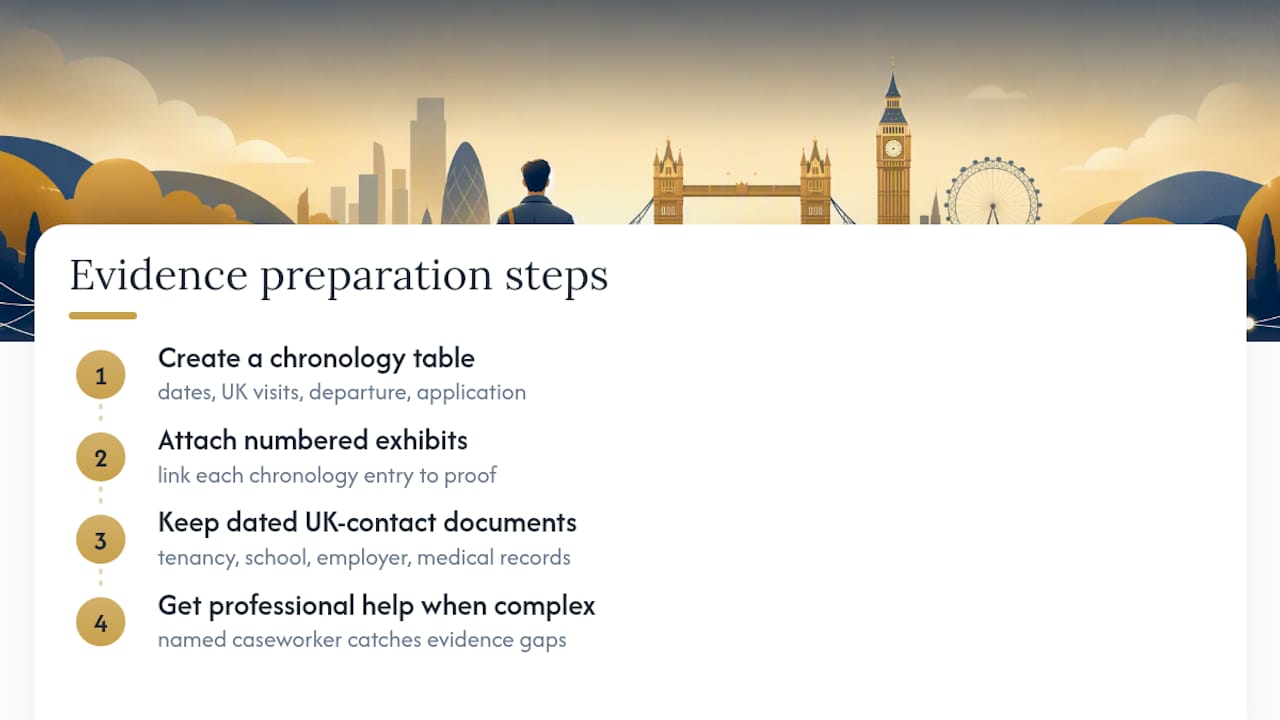
Keep dated copies of anything that shows continued UK contact: tenancy agreements, a spouse’s or child’s school records, employer letters confirming an overseas posting, or medical correspondence explaining a caregiving absence. These are the documents that convert a plausible story into a verified one.
— Humans
Get Help Preparing Your Returning Resident Application
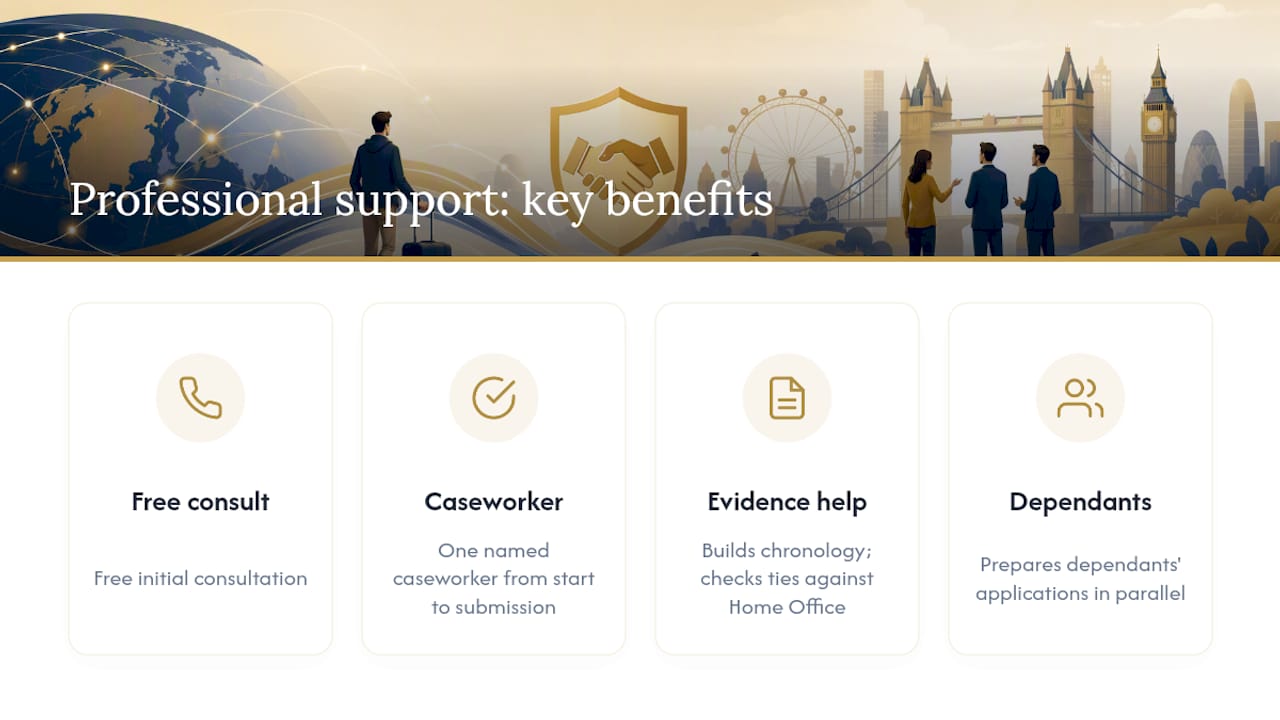
Professional support is an alternative to piecing together a Returning Resident application on your own from GOV.UK guidance pages and old forum threads. Every client can get a free consultation, a transparent fixed professional fee with no hidden extras, and one named caseworker who handles evidence preparation from the first call through submission.
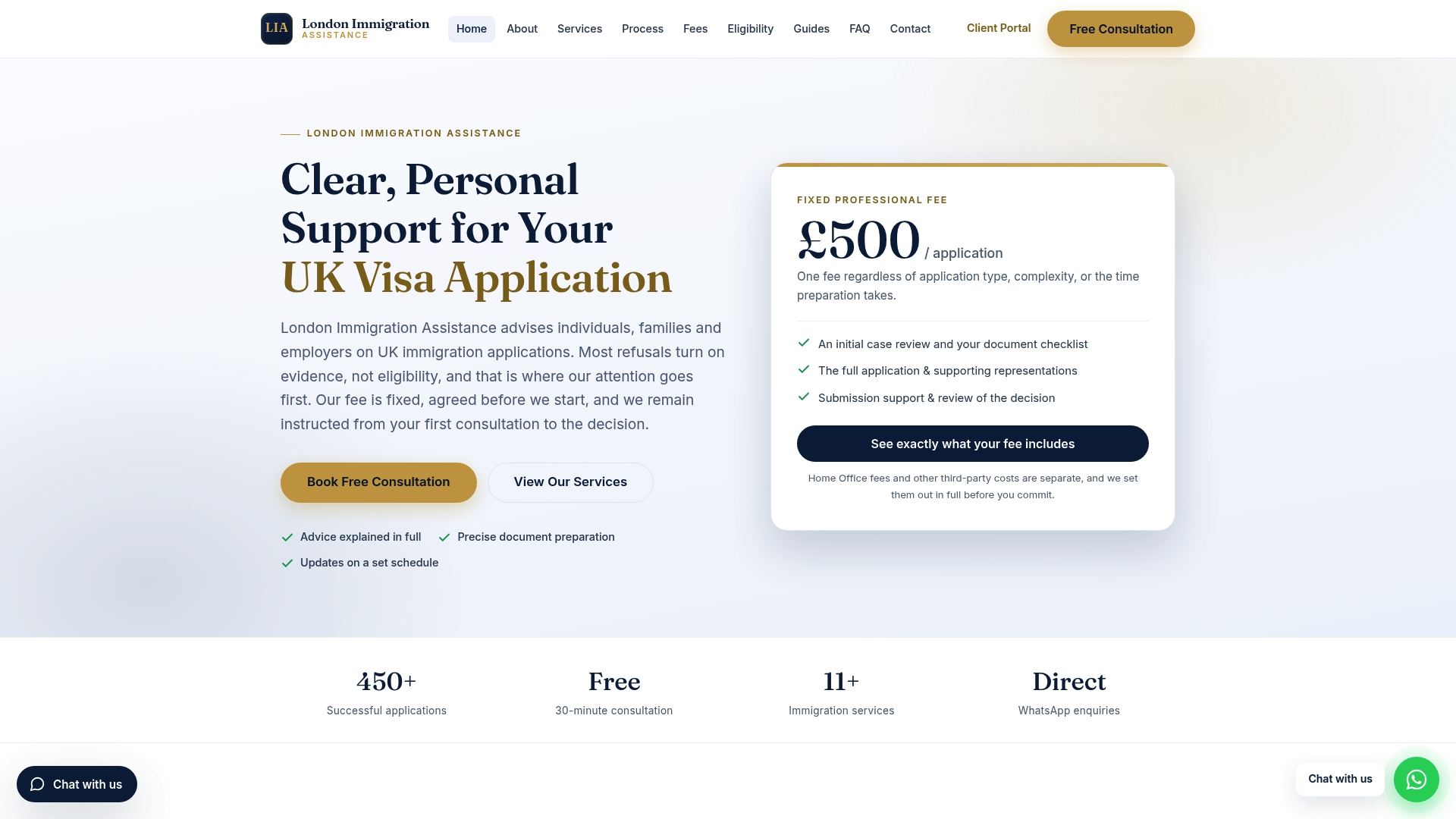
For a Returning Resident case, that means someone who builds your chronology table, checks that your evidence of strong ties actually answers what the Home Office looks for, and manages communication with visa application centres so requests do not sit unanswered. If you also have a spouse or children applying alongside you, the team can prepare each dependant’s separate application in parallel rather than leaving you to coordinate multiple submissions solo. Updates come through WhatsApp, so you are not left refreshing your inbox wondering where things stand.
Start with a free consultation and bring whatever you already have: old BRPs, passport stamps, correspondence, tenancy or employment records. From there, the team maps out exactly what is missing and what your full range of application options looks like before you pay a fee for anything.
Where to Verify the Official Rules
Confirm current thresholds and procedures directly on GOV.UK: the returning resident guidance, Appendix Returning Resident, and the lapsing leave guidance. For tailored support, visit Immigrationassistance.
Sources
FAQ
Do I Need a Returning Resident Visa if My ILR Card Hasn’t Expired?
Yes, if you have been outside the UK for more than the permitted continuous period. Settlement lapses automatically by operation of law regardless of what expiry date appears on your physical card.
How Long Can I Be Outside the UK Before ILR Lapses?
Ordinary ILR lapses after more than two continuous years outside the UK, while EUSS settled status lapses after five years, or four years for Swiss citizens and their family members. These are absolute thresholds, not guidelines caseworkers can waive.
Can My Spouse and Children Apply on My Returning Resident Application?
No. Each dependant, including a spouse or child, must submit their own separate application with their own supporting evidence and biometrics.
How Much Does Immigrationassistance Charge for Help With a Returning Resident Case?
Immigrationassistance operates on a fixed professional fee rather than hourly billing, though the exact figure for Returning Resident cases is not published on the general services list. Current pricing is available directly through a free consultation.